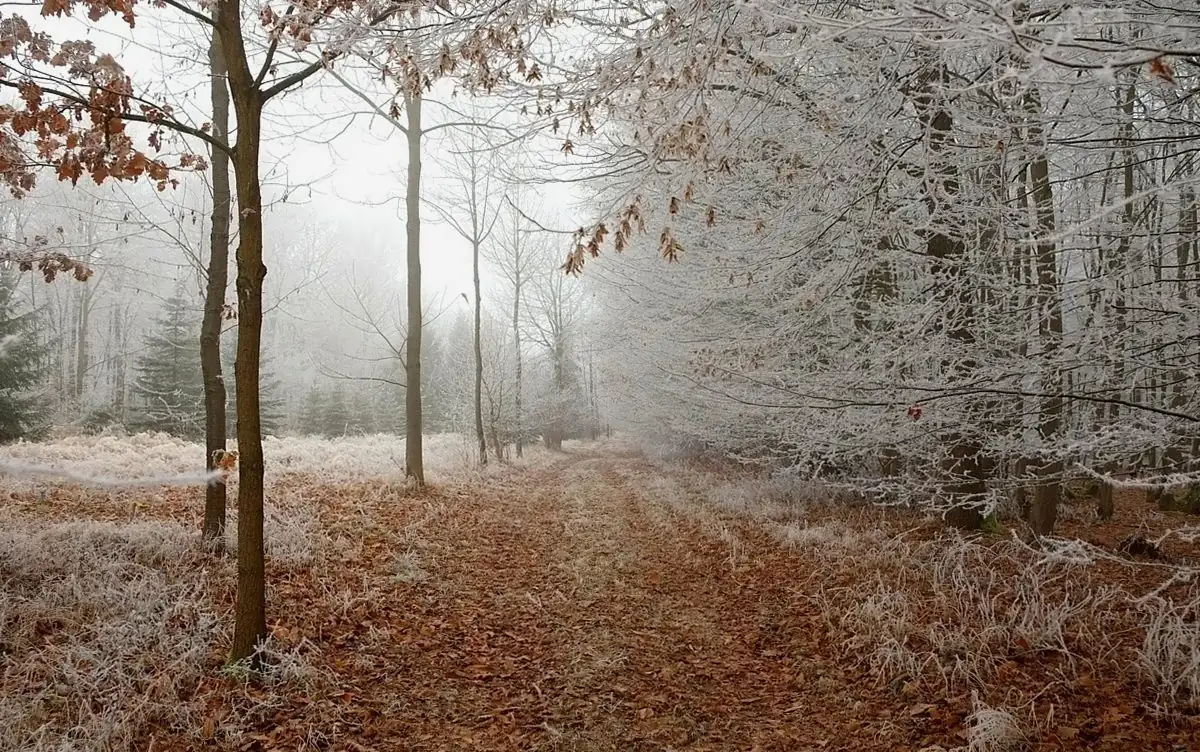
Why morning fog makes valley walks different
- By
- Misty Brook Field
- Articles
- Fog walks
- Date
Fog is not just a visual effect. It changes the acoustics of a valley, the temperature at ground level, and the behavior of the birds and insects that share the corridor with you. If you have only walked a creek trail in full sun, a fog-window morning is a genuinely different experience, and not in a vague, atmospheric way.
What fog actually does to a valley
When fog sits in a river valley, it tends to pool in the low points first, following the same drainage logic as the water below it. In the Texas hill country, this means the creek corridors fill from the bottom up, and the fog line often sits at a distinct elevation. Walk down into it and the temperature drops two or three degrees. The light goes flat and directionless. Sound carries differently, with less absorption from dry air and more reflection off the moisture-laden vegetation.
The effect on wildlife is real. Deer that would have moved back into cover by sunrise linger longer in fog. Herons stand motionless at the water's edge for extended periods. The birds that are active tend to be the ones that navigate by sound rather than sight, so the vocal activity in a fog-window morning is different in composition from a clear one.
Timing the fog window in central Texas
In central Texas, reliable fog windows occur most consistently from late September through early March, with the densest events typically following a warm, humid day succeeded by a clear, cool night. The fog forms overnight and burns off as the sun climbs, usually between 9:00 and 10:30 depending on the season and the valley's orientation.
The practical implication is that a walk starting at first light, roughly 6:30 to 7:00 in autumn, will catch the fog at its densest. A walk starting at 8:30 may catch the tail end. By 10:00, most valley fog in this region has lifted entirely. This is why the Morning Mist Walk module is timed to begin at dawn rather than at a more convenient hour.
What to pay attention to
The temptation on a foggy walk is to focus on the visual effect, the soft grey light, the obscured tree line, the way the water surface disappears into haze. Those are worth noticing. But the more interesting observations tend to come from listening. In fog, a creek sounds louder than it does in dry air. Individual water sounds, a riffle over a gravel bar, a deeper pool's low resonance, become distinct in a way they are not when ambient noise is higher.
Bring your attention to the ground as well. Fog deposits moisture on spider webs, on grass blades, on the undersides of leaves. These surfaces catch light differently from dry ones, and the detail visible at close range is finer than on a clear morning.
The fog window is short. That is part of what makes it worth planning around.
#Fog walks #Texas hill country #Morning nature #Valley exploration